
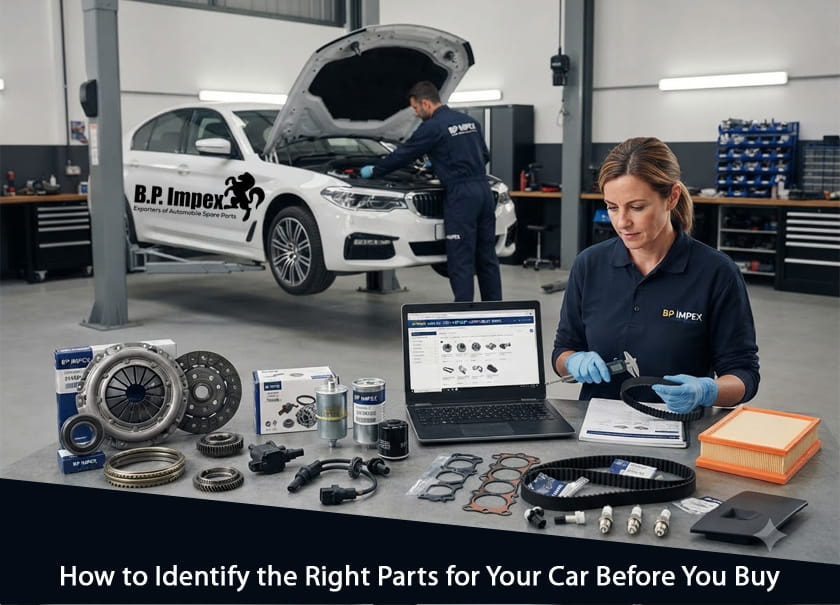
Choosing the correct replacement part for your car is more important than simply finding a part that looks similar. A component may appear suitable but still have differences in dimensions, mounting points, electrical connections, materials, or specifications. Installing the wrong part can affect vehicle performance, create additional repair costs, and sometimes compromise safety.
For vehicle owners, workshops, and fleet operators, taking a little time to verify the required component before purchasing can prevent unnecessary returns and installation problems. Whether you need mechanical components, body components, electrical items, or transmission parts, knowing what to check makes the buying process much easier.
The first step in identifying the right replacement component is to collect accurate information about your vehicle. The make and model alone may not always be enough because the same vehicle can have different parts depending on the production year, engine type, transmission, variant, and market.
Before searching for a component, keep details such as the vehicle model, manufacturing year, engine capacity, fuel type, transmission type, and variant available. The chassis or VIN number can be particularly useful because it provides a more precise way to identify the vehicle.
For example, a part designed for one version of a commercial vehicle may not necessarily fit another version produced in a different year. Accurate vehicle information helps narrow down the options and reduces the possibility of ordering an incompatible component.
It is common for vehicle owners to describe a problem rather than the exact component required. A mechanic may diagnose a faulty assembly, while the owner may only know that the vehicle is making an unusual noise or experiencing poor performance.
Before buying anything, determine whether you need an individual component or a complete assembly. A clutch-related problem, for instance, could involve the clutch plate, pressure plate, release bearing, or another related component. Purchasing only one item without confirming the actual fault can lead to another repair later.
The same principle applies to other systems. Understanding the function of the required component helps you communicate more clearly with suppliers and mechanics and makes it easier to compare suitable options.
One of the most reliable ways to identify a replacement component is by checking its part number. Manufacturers assign specific numbers to components to distinguish them according to their design and application.
If the old component is still available, inspect it for a printed, stamped, engraved, or labelled part number. You can then compare that number with the information provided by the supplier or parts catalogue.
When buying Tata components, checking the applicable part number is especially useful because different models and variants can use different specifications. Searching only by a general description such as "brake part" or "engine part" may produce too many possibilities.
A genuine catalogue or knowledgeable supplier can help match the component with the correct vehicle application before an order is placed.
Even within the same model range, parts can change according to the variant. Differences may exist between passenger vehicles, commercial vehicles, different engine options, facelift versions, and different production periods.
This is particularly important when purchasing Tata Spare Parts. A component suitable for one Tata vehicle may not be suitable for another simply because both parts look similar.
Always provide the complete vehicle details rather than relying only on the brand name. If possible, mention the model, variant, manufacturing year, engine specification, and VIN or chassis information when speaking with a parts supplier.
Mechanical components need accurate identification because small differences in dimensions and specifications can affect installation and performance.
For transmission repairs, for example, Gear Spare Parts should be selected according to the specific gearbox and vehicle application. Gear-related components may differ in size, tooth profile, shaft dimensions, and compatibility with other transmission components.
Similarly, when replacing clutch components, confirm whether the required part is designed for the exact engine and transmission combination. Tata Clutch Parts should be matched with the appropriate vehicle specification rather than selected solely because the component appears physically similar.
This approach helps ensure that the replacement part works correctly with the surrounding components.
Body components can vary significantly between vehicle generations and variants. Headlamps, bumpers, fenders, doors, grilles, bonnets, mirrors, and other exterior components may have different mounting arrangements even when they belong to vehicles with similar names.
When purchasing Tata Body Spare Parts, compare the component with the original part carefully. Check mounting holes, dimensions, shape, connector locations, and other relevant design features.
For body repairs, appearance also matters. A component may technically fit but still have differences in styling or finish. Matching the exact model and variant helps maintain the original appearance of the vehicle after repair.
Electrical components require additional attention because compatibility depends on more than physical size. Voltage, amperage, connectors, wiring arrangements, communication protocols, and vehicle-specific electronics can all influence whether a component will work properly.
When purchasing Tata Electrical Spare Parts, identify the original component and check its part number and specifications. Items such as switches, sensors, lighting components, relays, wiring-related parts, and electronic modules may have very specific applications.
Never assume that two electrical components are interchangeable simply because their connectors look similar. Incorrect electrical components can cause warning lights, malfunctioning systems, wiring problems, or damage to related components.
A proper parts catalogue can make the identification process significantly easier. Catalogues typically organize components according to vehicle model, assembly, part number, and application.
Instead of searching randomly through online listings, use a catalogue or supplier that provides vehicle-specific information. A reliable catalogue can help you determine whether the selected component is intended for your exact vehicle.
When shopping online, read the product description carefully and look for information about compatible models, part numbers, specifications, and applicable variants. If the listing does not provide enough information, ask the supplier for confirmation before purchasing.
If the original component has already been removed, compare it with the replacement before installation. Look at the overall shape, dimensions, mounting points, connectors, holes, threads, and other important characteristics.
This visual comparison is useful, but it should not replace part-number verification. Two components can look almost identical while having different specifications.
For this reason, the safest approach is to combine physical comparison with catalogue information and vehicle details. If anything appears different, stop the installation and confirm compatibility rather than forcing the component into position.
Price is naturally an important factor when buying replacement components, but the cheapest option is not always the most economical choice. Poor-quality or incorrectly specified components can wear out quickly and may cause additional damage to connected systems.
For critical applications, consider the quality, source, specifications, and warranty or return policy before making a decision. Genuine or properly verified replacement components are generally easier to match because their application information can be checked against the vehicle.
This is especially important for components involved in braking, steering, transmission, engine operation, and electrical systems.
If you are unsure about a component, ask the supplier for confirmation before placing the order. Provide complete vehicle details and, where possible, the original part number.
Useful information to confirm includes whether the component fits the exact vehicle variant, whether it is supplied individually or as an assembly, whether the listed part number matches the original application, and whether any additional components are required for installation.
If you are purchasing Tata Ace Parts, for example, specifying the exact Tata Ace variant and vehicle details can help the supplier identify the correct component instead of making a selection based only on the "Ace" name.
Clear communication can save both time and money.
Online spare parts shopping provides convenience and access to a wide range of components, but buyers need to be careful with product descriptions. A photograph alone is not sufficient evidence that a component will fit your vehicle.
Before ordering, check the product title, application details, part number, specifications, seller information, and return policy. Avoid placing an order when essential compatibility information is missing.
It is also useful to keep a record of the part number, order details, and vehicle information. This makes future purchases easier and helps maintain consistency when the same component needs to be replaced again.
The right replacement part should do more than fit physically. It should perform according to the requirements of the vehicle and work properly with the surrounding system.
A correct component can support reliable operation, proper fitment, and predictable maintenance. An incorrect component may require modification, create installation difficulties, or cause premature failure.
For this reason, the buying decision should be based on compatibility and quality rather than price alone. A slightly more expensive but correctly specified component can often provide better long-term value than an inexpensive part that does not match the vehicle.
Identifying the right car part before purchasing does not have to be complicated. Start with complete vehicle information, identify the actual component required, check the original part number, and verify the application through a reliable catalogue or experienced supplier.
Whether you are looking for body components, clutch components, electrical items, transmission parts, or replacement components for a commercial vehicle, accurate identification should always come before placing an order.
BP Impex helps customers find suitable replacement components by focusing on vehicle application, part identification, and product compatibility. Taking the time to verify the correct part before buying can make repairs smoother, reduce unnecessary returns, and help keep your vehicle operating reliably.
Read more: Genuine Tata Spare Parts and Accessories